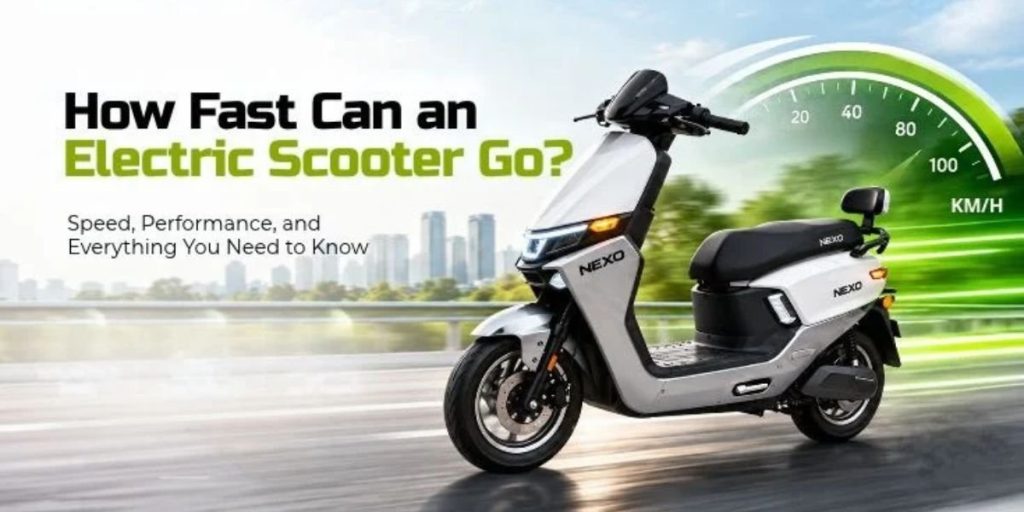
Electric scooters are rapidly becoming popular mobility solutions across the world as more people are switching to cleaner eco-friendly transportation due to rising fuel prices, increasing traffic congestion, and a growing focus on sustainable travel. During daily commuting, one of the most common questions before purchasing an electric scooter is how fast can an electric scooter go, because speed plays an important role when choosing a scooter.
This guide explains electric scooter speed by covering typical speed ranges, the key factors that affect performance, and how different components influence real-world riding. From motor power and battery capacity to riding conditions, understanding these factors helps riders choose a scooter that offers the right balance of speed, safety, and efficiency.
Understanding Electric Scooter Speed
Electric scooter speed refers to the maximum velocity a scooter can reach when it is powered by an electric motor and battery system. Unlike traditional petrol scooters, electric scooters deliver instant torque, helping them accelerate quickly and smoothly while improving acceleration and overall performance. The achievable speed varies by category because the motor, battery, and power system determine how efficiently electric power is converted into velocity. As a result, the maximum speed depends largely on available torque, motor output, and the scooter’s overall design.
Low-Speed Electric Scooters
Low-speed scooters are designed primarily for short-distance commuting, urban travel, and short city rides, with a maximum speed of around 25 km/h. They offer an economical mobility solution for students and people seeking simple transportation, daily mobility, and convenient city commuting.
High-Speed Electric Scooters
High-speed electric scooters use powerful motors and larger batteries for better acceleration, better performance, and faster travel time. Their maximum speed can reach 45 km/h to 80 km/h, making these electric scooters suitable for longer commuting distances and different types of riders.
Average Speed of Electric Scooters
The average speed of electric scooters depends on motor capacity, scooter design, battery performance, road conditions, and rider needs, with 40–60 km/h offering ideal speed for efficient commuting and safety.
| Scooter Type | Common Speed Range | Typical Maximum Speed | Best Use |
| Entry-Level Electric Scooters / entry-level scooters | 20–25 km/h | 25 km/h | daily commuting needs, daily travel, mobility |
| Mid-Range Electric Scooters / mid-range scooters | 35–45 km/h | 50 km/h | commuting, balanced travel time, battery efficiency |
| High-Performance Electric Scooters / high-performance scooters | 50–70 km/h | 80 km/h or more | Higher performance level, stronger motor performance, greater speed |
Factors That Affect Electric Scooter Speed
Several speed factors influence electric scooter speed; no single component can determine speed. Each component affects how fast an electric scooter travels, shaping scooter speed, speed, performance, and important ones.
1. Motor Power
Motor power directly affects electric scooter speed, acceleration, and scooter performance. Measured in watts (W), higher motor power gives the electric motor more power to reach higher speeds, deliver strong acceleration, and improve motor performance. Different motor ranges suit different electric scooters, while powerful motors, efficient motors, and energy-efficient motors can balance high-speed performance, speed performance, power efficiency, efficient power, and energy efficiency.
- 250W Motor — up to 25 km/h
- 500W Motor — around 35 km/h
- 1000W Motor — about 45–50 km/h
2000W or more — up to 70+ km/h, helping a faster scooter achieve higher speeds and top speeds, particularly among high-performance electric scooters.
2. Battery Capacity
Battery capacity influences scooter speed, acceleration, and battery range. A larger battery improves energy supply and power delivery, helping the electric scooter motor maintain higher speeds for longer periods.
- 1.5 kWh – 2 kWh: Suitable for low-speed scooters
- 2.5 kWh – 3 kWh: Suitable for mid-range scooters
- 3.5 kWh and above: Used in high-performance scooters
kilowatt-hours (kWh) measure energy capacity, while advanced battery technology supports consistent speed, speed maintenance, sustained speed, speed consistency, and battery efficiency.
Modern electric scooters use reliable battery systems and an efficient battery system to provide stable performance, smooth acceleration, high-speed performance, riding range, long rides, battery energy, motor energy, scooter battery reliability, and overall performance.
3. Rider Weight
Rider weight and total load directly affect scooter speed, top speed, and scooter performance. A higher load capacity including luggage, cargo, pillion passenger, and carrying weight increases motor effort, causing speed reduction and affecting acceleration. Electric scooters have maximum load limits to maintain optimal performance, stable travel speed, and efficient motor performance. Vehicle load, passenger weight, and overall rider load influence the motor, speed, and performance of the scooter.
4. Road Conditions
Road quality affects electric scooter speed, scooter performance, and speed capability. Smooth roads support higher speed, while rough roads, uneven roads, and difficult terrain cause reduced performance. Proper suspension systems and powerful motors improve road performance and handling.
5. Weather Conditions
Weather can influence scooter speed, electric scooter performance, and overall riding conditions. Strong winds create wind resistance and may reduce speed, while cold temperatures can affect battery performance, battery efficiency, and battery impact, leading to speed reduction. Wet roads and wet conditions require slower riding because road grip, road safety, and rider safety become more important.
Riders should adjust speed according to environmental conditions, weather conditions, and environmental factors to maintain a safe speed. Understanding weather impact, temperature effects, and changing riding speed helps improve safety and maintain better scooter performance in different situations.
6. Tire Pressure
Proper tyre pressure helps electric scooters maintain better electric scooter speed, scooter speed, and optimal speed by improving rolling efficiency, wheel efficiency, and tyre efficiency. Low tyre pressure increases friction and rolling resistance, causing reduced speed, speed reduction, and higher battery consumption. Maintaining the recommended tire pressure supports battery efficiency, energy consumption, riding efficiency, speed performance, scooter performance, and optimal performance.
Electric Scooter Speed vs Petrol Scooter Speed
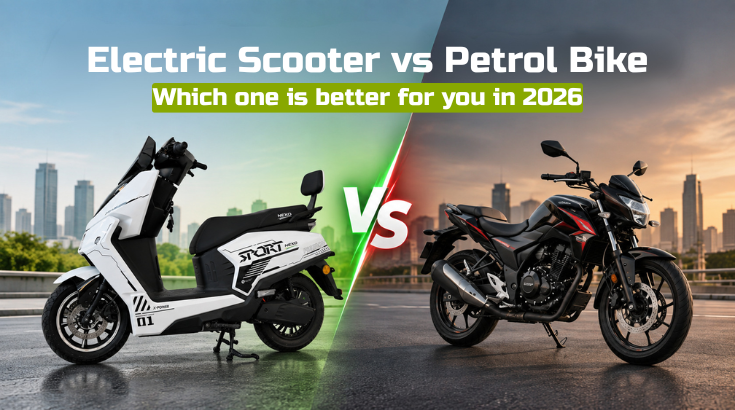
Electric scooters and traditional petrol scooters differ in speed performance, acceleration, maintenance, and overall scooter performance. While petrol scooters may offer higher top speeds, electric scooter acceleration provides instant torque, smoother acceleration, and better energy efficiency for modern electric mobility.
| Comparison Factor | Electric Scooters | Petrol Scooters |
| Average Speed | 40–60 km/h | 60–80 km/h |
| Acceleration | Instant torque, faster electric scooter acceleration, smoother acceleration | Slower acceleration compared with electric models |
| Top Speed | Balanced top speed with improved electric scooter performance | Often offers higher top speeds |
| Maintenance | Lower maintenance and reduced operating costs | Higher maintenance requirements |
| Fuel Cost | Very low fuel cost with better efficiency | High fuel cost |
| Environmental Impact | Zero emissions, lower environmental impact | More polluting emissions |
| Performance | Continuous performance improvement, better scooter efficiency | Conventional scooter performance with traditional systems |
Legal Speed Limits for Electric Scooters
Electric scooters must follow speed limits set by local regulations, regional regulations, and electric scooter regulations. In many areas, limits may range around 15 to 25 mph on public roads, with maximum speeds, speed restrictions, and legal speed limits controlled through speed limiters. Riders should check local laws, jurisdictions, and legal requirements to ensure speed compliance, safe riding speed, and responsible legal riding while avoiding exceed limits.
How Electric Scooters Maintain Speed Efficiency
Battery Management System (BMS)
The Battery Management System monitors battery temperature, voltage, and charging levels to ensure the battery operates efficiently and operates safely. It improves battery efficiency, battery safety, and battery performance through temperature monitoring, voltage monitoring, battery monitoring, energy management, battery protection, and charging management for reliable electric scooter battery operation.
Controller System
The controller acts as the scooter brain, managing power flow between the battery and motor. The electric scooter controller uses power regulation, energy flow, and motor control to maintain smooth acceleration and controlled speed. It regulates battery power, motor power, and battery-to-motor power through acceleration control, speed control, and speed regulation for improved scooter performance.
Regenerative Braking
Regenerative braking technology in electric scooters converts braking energy into battery power through energy conversion, improving efficiency, battery efficiency, and energy recovery. This braking system uses smart electronic systems and electronic control to enhance electric scooter performance, scooter efficiency, and battery performance.
Ideal Electric Scooter Speed for Daily Commuting
For urban riders, an ideal speed range of 40 km/h to 60 km/h offers a balance of safe urban travel, comfortable riding experience, and efficient battery usage. This practical speed range supports daily commuting, city commuting, and urban travel while improving rider safety, speed control, traffic control, and urban mobility. It also enhances electric scooter performance, battery efficiency, and travel efficiency.
Tips to Improve Electric Scooter Performance
Maintain Proper Battery Charging
Avoid deep discharge and maintain proper battery charging with regular charging to improve battery health and battery life. Consistent charging cycle management supports battery performance, battery maintenance, and electric scooter battery reliability through better energy storage and balanced charge level.
Keep Tires Properly Inflated
Maintaining correct tyre pressure improves electric scooter speed, speed performance, and scooter performance by enhancing rolling efficiency, riding efficiency, and wheel performance. Proper tyre maintenance and tire pressure support optimal speed, efficiency, and energy efficiency.
Avoid Overloading
Following the recommended weight capacity helps maintain electric scooter safety and scooter performance. Proper load management with a suitable scooter load, rider weight, and carrying capacity ensures optimal performance, better scooter efficiency, and a safe load limit.
Perform Regular Maintenance
Regular routine servicing improves electric scooter maintenance, scooter servicing, and overall scooter performance. Checking the motor, brakes, and electrical systems keeps electrical components in good condition, supporting motor performance, brake system reliability, vehicle condition, and preventive maintenance.
Future of High-Speed Electric Scooters
The future models of electric scooters are driven by electric scooter technology, innovation, and technological evolution. Manufacturers are developing next-generation electric scooters with faster acceleration, higher top speeds, longer battery range, and improved scooter performance through advanced battery technology and advanced technology.
Future electric mobility will focus on high-speed performance, energy efficiency, and sustainable mobility. Improvements in smart connectivity features, advanced safety systems, smart features, and rider safety will create more powerful scooters, capable scooters, and efficient future electric scooters with better battery range, battery improvement, performance improvement, and advanced mobility technology.
Why Electric Scooters Are the Future of Urban Mobility
Electric scooters are becoming a practical choice for modern transportation because they offer lower operating costs, reduced environmental impact, and energy-efficient commuting. With growing urban traffic and environmental concerns, they provide a practical mobility solution through a quiet ride, smooth ride, and improved riding comfort.
Conclusion
Choosing the right electric scooter speed depends on balancing motor power, battery capacity, rider weight, road conditions, and weather. Most modern electric scooters deliver practical performance within a speed range of 25 km/h to 80 km/h, while 40 km/h to 60 km/h remains a comfortable range for daily travel. With advancements in electric mobility, battery performance, and scooter design, today’s scooters provide reliable performance, improved safety, and eco-friendly mobility for efficient everyday transportation.